
How to play
How to Play: Your Complete Poker Guide
Introduction to Poker
Poker’s been kicking around for over 100 years, and it still feels brand new every time you sit down at a table. Whether you’re playing online or in a real casino, it mixes real skill with some serious bluffing and a little luck thrown in for fun. If you’re just starting out or want a quick refresher, this guide will show you everything you need to get comfortable and actually start winning hands.
The cool thing about online poker? You can jump in anytime, play against folks from all over the planet, and try out tons of different games without any pressure. That’s why it’s so addictive – it’s fun, fast, and way more than just slapping cards down.
The Basics of Poker
Let’s get the simple words out of the way first. Once you know these, you’ll hear them in every hand and chat.
- Ante: That little bet everyone puts up to start the hand.
- Blinds: The forced bets that open the betting round – small blind from the guy left of the dealer, big blind double that.
- Bet: Just putting money in the pot.
- Call: Matching whatever’s already bet to stay in.
- Check: Passing when there’s no bet to answer.
- Fold: Dropping out and walking away.
- Raise: Betting more to grow the pot.
- Pot: The pile of money in the middle of the table.
- River: The last community card in Texas Hold’em.
- Turn: The card right before the river.
- Flop: The first three community cards dealt.
- Betting Round: Everyone acts in turn.
- Position: Being the last one to act is a huge advantage.
- Stack: How much money or chips you’ve got left.
Texas Hold’em: The Game That Everyone Plays
Texas Hold’em is the one millions log into every day. It’s simple on the surface, but the strategy underneath is what actually wins. Four cards get dealt in the middle for all of you, plus your two hole cards – seven cards total to work with.
Pre-Draw
Two hole cards face down. Small and big blinds posted to start.
Pre-Flop Betting
Starts with the player left of the big blind. Check, bet, call, raise, or fold.
Flop
Three community cards up, then betting again.
Turn
One more card, betting round.
River
Final community card, last betting round.
Showdown
Everyone shows their cards, best hand wins the pot.
Poker Hand Rankings – What Beats What
Gotta know this stuff cold or you’re just donating money. Here’s the order, strongest to weakest:
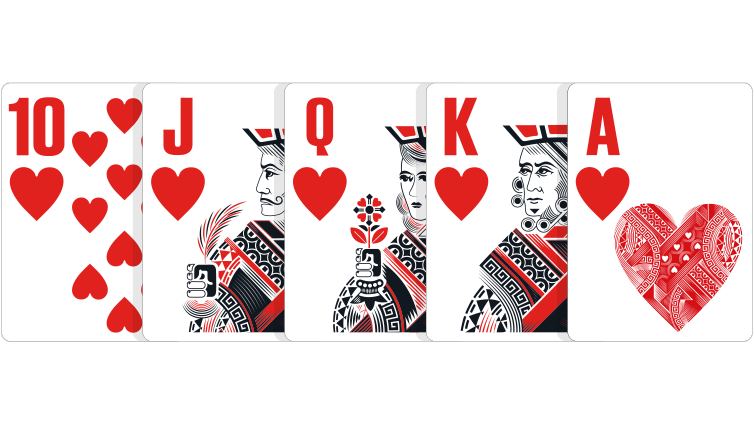
Royal Flush
A-K-Q-J-10 all the same suit. Nothing touches it.
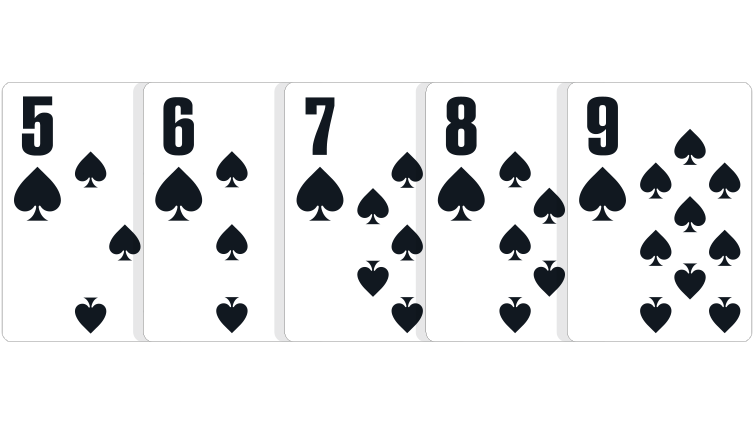
Straight Flush
Five in a row, same suit. Higher top card wins.
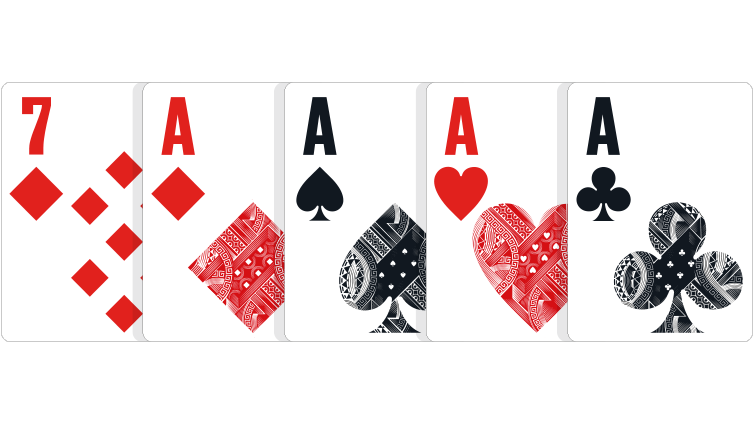
Four of a Kind
Four of the same rank plus a kicker. Four aces is the best.
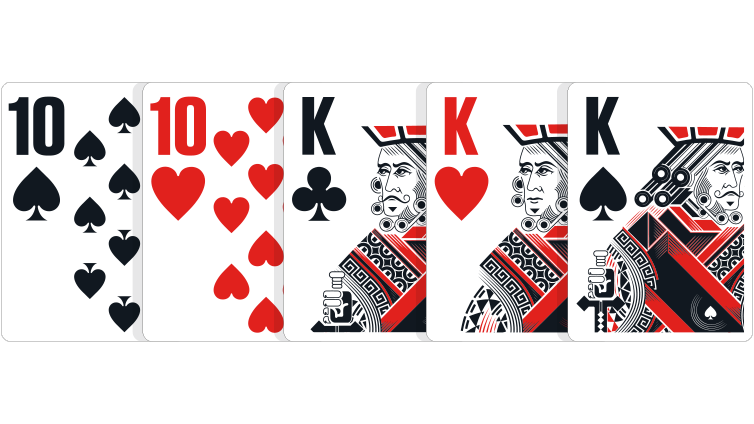
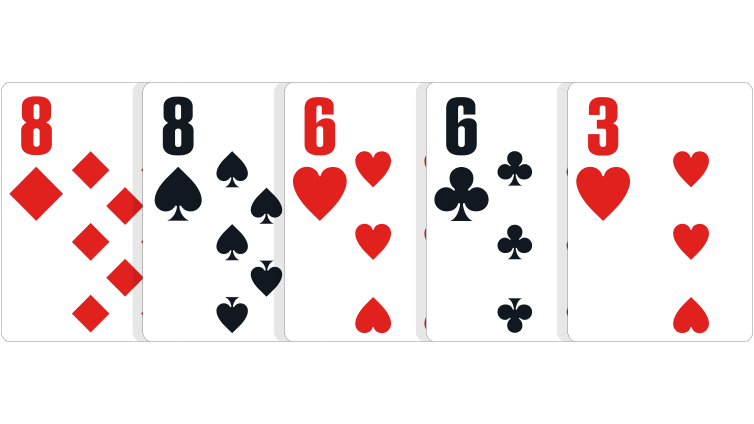
Full House
Three of one rank and a pair of another. Three 7s with two queens beats three 10s with two kings.
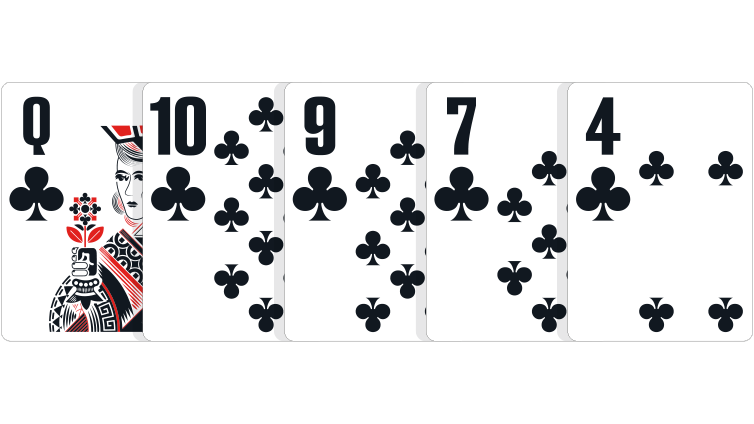
Flush
Five cards same suit but not in order. Highest cards win.
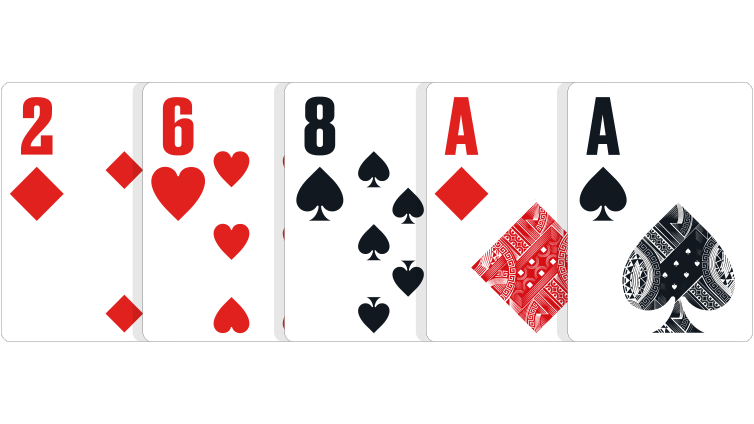
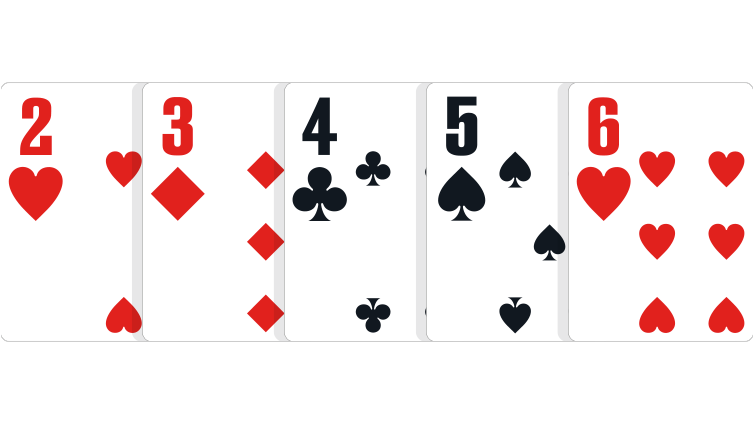
Straight
Five in a row, mixed suits. Ace-low (A-2-3-4-5) is the weakest.
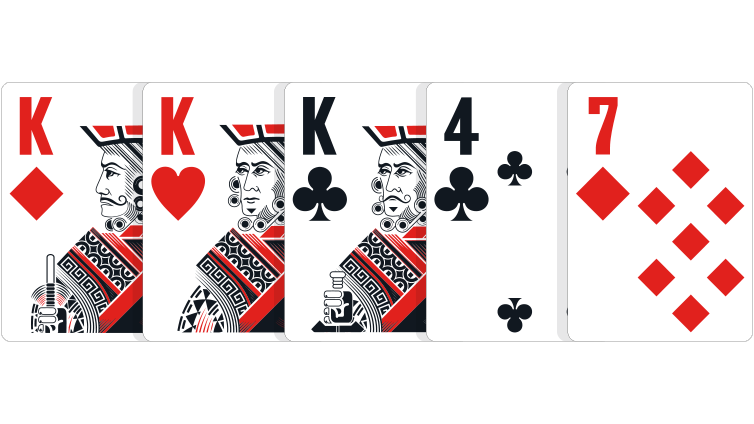
Three of a Kind
Three matching ranks and two kickers. Same trips? The kickers decide it.
Two Pair
Two different pairs plus one kicker. Two pair of aces or kings is the best.
One Pair
Just two cards of the same rank. Higher pair wins.
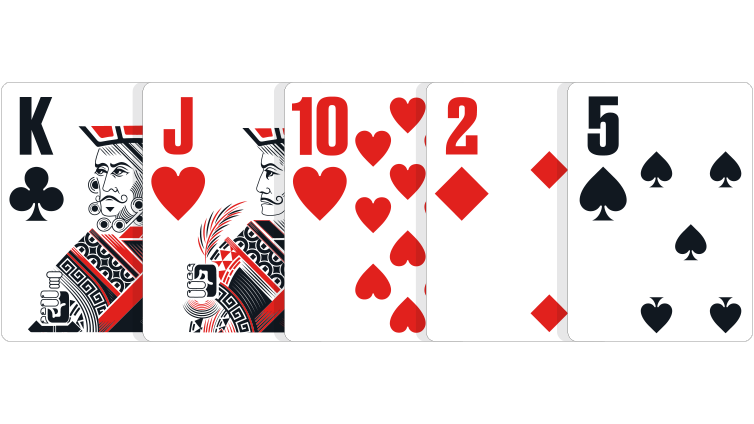
High Card
Anything else. Highest card wins the tiebreaker.
Strategies That Actually Work
Preflop: Don’t Play Weak Hands
Opening hands decide most of your results. From the blinds stay tight—top 10-15% only. Think AA, KK, AKs, and the middle pairs from 22 up to 99.
Leave the trash like 72o or 76s alone unless you’re late and sitting on a big stack. Position and the table make a huge difference.
Postflop: Read the Board
Boards are either connected (like 7-8-9) or disconnected (A-K-Q). Connected ones favor draws and aggression. Disconnected ones love value bets.
Try these moves:
- Continuation betting on the flop
- Check-raising to put pressure on
- Floating with a draw to see the next card free
Bluffing and Value Betting
Bluffing is when you convince your opponent you have a monster hand. Do it when you have nothing and the board misses their range. Value betting is getting paid off when you do have the best hand. Players who do both win way more.
Bankroll Management: Keep Your Money Safe
This is the real secret. Never risk more than 1-2% of your total stack on one hand. Set rules like “stop after five bad beats” or “quit if down 10%.” Winners stick to this forever.
Other Games to Try
Texas Hold’em isn’t the only one – there’s a whole bunch more.
Omaha and Omaha Hi-Lo
Two hole cards plus five community cards. Omaha Hi-Lo splits the pot between high and low, and it’s popular because it rewards creative plays.
Seven Card Stud
Cards are dealt one by one face up. Stud games are fun when you read how the middle cards change the picture.
Razz and Seven Card Stud Hi-Lo
These focus on low hands, so they’re a nice break when you’re tired of Hold’em.
Online sites give you all these options right away, so you can practice anytime.
Tips to Get Better Fast

When You’re Out of Position
You have to act first, so play tighter and bet smaller. Learn check-raises and avoid shoving your whole stack too soon.
Exploiting New Players
New folks often call too wide and fold too much. Bluff more and value-bet thinner hands.
Try these moves

Reading Others
Watch how they bet, time their moves, and play different spots. A small preflop raise might mean they’re bluffing a lot.

Staying Calm
Poker is mental. Keep your cool on bad runs, take breaks, and focus on the process.
Mistakes That Slow You Down
- Playing too many hands preflop
- Forgetting position
- Chasing after lost bets
- Not watching bankroll
- Betting big too fast
Steer clear of these and your game gets better quick.
Practice at Home
Online poker spots are perfect for this. Play money tables let you test ideas without risk, while Zoom games give you hundreds of hands an hour against fresh players. Use them to build real skill before going real money.
Conclusion
Poker is a game you can keep learning for years. The best players are always studying new stuff and adjusting. Start with the basics here, stay disciplined, and use the strategies that actually work. Jump in, play smart, and you’ll start seeing results. The tables are waiting!
FAQs
How much money should I start with online?
Start small – enough to learn without stress. Most folks begin with $50–$200 play money before moving up.
What if I’m on a losing streak?
Take a break. Tilt kills winning sessions. Come back fresh when your head is clear.
Is online poker fair?
Reputable sites use good security and random dealing, so it’s about as fair as live games. Always pick trusted ones.
How do I improve my win rate fast?
Cash games keep your stack the same while you play for real money. Tournaments shrink the field until one person takes all.
Ready to play? Grab a seat and start building your skills today!







Copyright © 2001-2026, Rational Intellectual Holdings Limited. All rights reserved.
Operated by TSG Interactive Gaming Europe Limited, a company registered in Malta under No. C54266, with registered office at Spinola Terraces, Mikiel Ang Borg Street, St. Julian’s, SPK 1000, Malta. License No. MGA/B2C/213/2011, awarded on August 1, 2018. Maltese VAT-ID MT24413927. Online gambling is regulated in Malta by the Malta Gaming Authority.
Gambling can be harmful if not controlled and may lead to addiction! Use our online tools and play responsibly.
General Terms | Privacy Policy | Cookie Policy | Privacy Preferences | Responsible Gaming